Today's journey takes us to the political and spiritual centers of Tokyo, exploring the home of the Emperor and a shrine dedicated to one of Japan's most transformative modern leaders. We'll trace a path from the heart of the nation's power to a tranquil forest in the midst of the bustling city.
Morning: The Imperial Palace
Located in Chiyoda Ward, the political heart of Japan, the Imperial Palace stands on the former site of Edo Castle. While the inner grounds are largely private and require special reservations, the public areas offer a profound sense of history and imperial scale.
Begin your visit at the Imperial Palace Outer Garden (皇居外苑), which is open to the public free of charge. Here, you can walk among the remnants of the old castle's walls, moats, and entrance gates. The main attraction for many is the view of the Nijubashi Bridge, two picturesque bridges that form an entrance to the inner palace grounds. This iconic vista, with the Fushimi-yagura watchtower in the background, is one of Tokyo's most famous historical landmarks. The gardens themselves are a peaceful escape, allowing you to contemplate the centuries of history that unfolded on this very spot. The public gardens are generally open from 10:00 to 14:25.
Lunch Break: A Glimpse of Meiji-era Architecture
Just a short distance from the palace is Tokyo Station. Before heading to your next destination, take a moment to admire the station's Marunouchi Building. This magnificent red-brick structure, completed in a grand Renaissance style, is a historical landmark in its own right. It stands as a symbol of Japan's modernization during the Meiji era and offers a beautiful architectural contrast to the traditional Japanese structures of the palace. You can get a great panoramic view of the station from the 6th floor of the adjacent shopping center.
Afternoon: Meiji Jingu Shrine
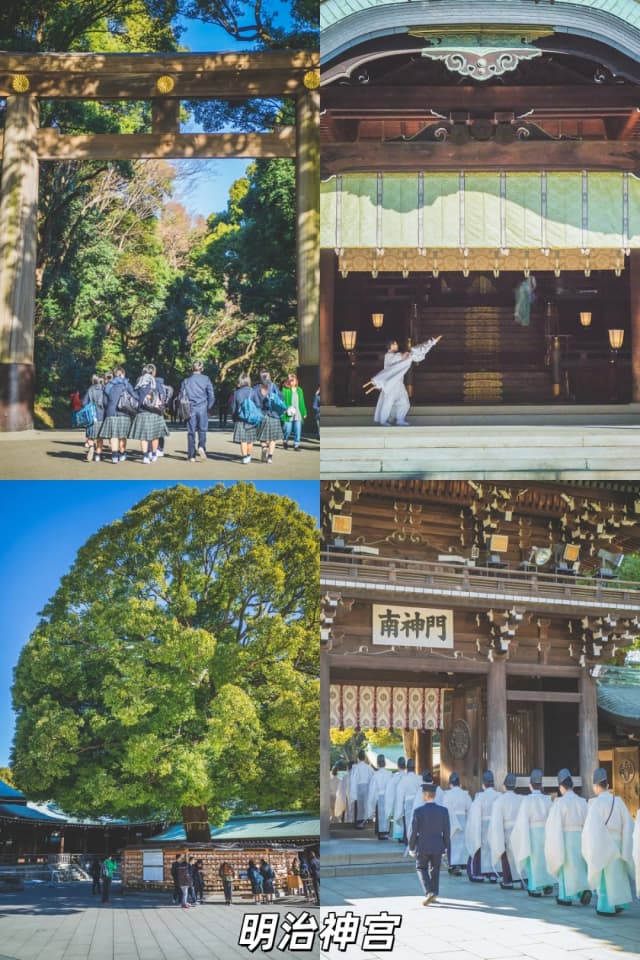
From the center of political power, travel to the spiritual sanctuary of Meiji Jingu in Shibuya. This shrine is dedicated to the deified spirits of Emperor Meiji and his wife, Empress Shoken, who presided over Japan's rapid modernization in the late 19th and early 20th centuries.
Unlike the ornate temples you might see elsewhere, Meiji Jingu is characterized by its simple, dignified architecture and its serene setting. To reach the main shrine complex, you walk along a wide, peaceful path through a dense forest. This man-made forest has grown into a true urban oasis, completely insulating you from the sounds of the surrounding city.
As you walk, you will pass under massive wooden torii gates, which mark the transition from the mundane to the sacred. The shrine is an active place of worship, and if you are lucky, you may witness a traditional Shinto wedding procession, offering a beautiful and authentic glimpse into Japanese culture.